
ASDAN Qualifications
Pathways to Achievement
ASDAN qualifications are a range of nationally approved qualifications that develop personal, social, and employability skills for learners of all abilities.
They are designed to be flexible and work at the learner's own pace, with different qualifications available at various levels, including those for learners with special educational needs and disabilities (SEND).
The qualifications can be equivalent to GCSEs and A-Levels, with higher-level qualifications potentially earning UCAS points for university entry.





Learn Purposefully

Lead Positively

Live Confidently
Examples of ASDAN programmes and qualifications
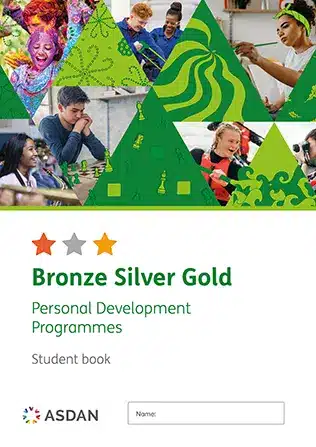
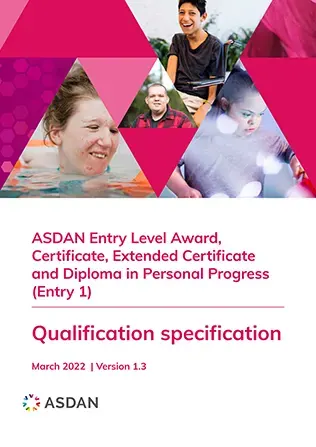


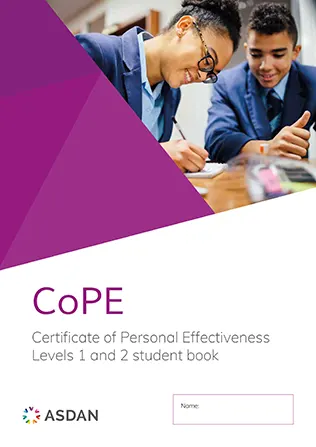
Key features of ASDAN qualifications
• Focus on skills: They focus on developing competencies like communication, teamwork, problem-solving, and critical thinking through practical, interest-led activities.
• Learner-centered: Qualifications are designed to meet individual needs rather than focus on exams, allowing learners to work at their own pace.
• Portfolio-based: Learners compile a portfolio of evidence to demonstrate they have met the requirements of the qualification.
• Variety of levels: Qualifications are available at different levels to suit a wide range of abilities, from Entry Level to Level 3.
• Specific programmes: Programs are tailored for different needs, such as the Personal Progress qualifications for learners with SEND or the Personal and Social Development qualifications for developing confidence and well-being.
Equivalence and recognition
• GCSE and A-Level equivalence: Level 1 and 2 qualifications can be equivalent to a GCSE, while Level 3 qualifications can be equivalent to a third or more of an A-Level.
• UCAS points: Some Level 3 qualifications, like the Certificate of Personal Effectiveness (CoPE) and the Extended Project Qualification, are recognized for UCAS points, which can be used for university applications.
Placement Process
A clear and collaborative process designed to provide the right support at the right time.

Referral
The school or local authority submits a referral form or email outlining the pupil’s background, needs, and current support. This helps us understand how to provide the most appropriate support. Desired outcomes and placement duration are included, and parents/carers are consulted to provide informed consent.

Assessment and Suitability Meeting
We review the referral and may arrange an initial assessment or trial visit. Safeguarding and risk checks are completed, and we consider curriculum suitability and placement capacity to ensure we can meet the pupil’s needs effectively.

Agreement and Planning
A placement agreement is drawn up in collaboration with the local authority, school, Aspire, and the family. This outlines roles and responsibilities, funding arrangements, safeguarding and attendance expectations, progress monitoring, and the review schedule, along with agreed next steps.

Induction and Start
The pupil begins with a structured induction, including orientation, timetable, key contacts, behaviour expectations, and support planning. They select their qualification pathway from our programme options. Ongoing communication with the referring organisation ensures consistent support.

Monitoring and Review
Progress, wellbeing, and suitability are reviewed regularly with all partners. Adjustments or reintegration planning are made as needed, maintaining shared goals and ensuring the pupil remains at the centre of the process.